Hamsters, rats, chinchillas and ferrets: what each one needs

Short answer: choose kit for the species, not for “small pets” in general. Syrian hamsters live alone and need a large floor area, deep bedding and a big solid wheel. Gerbils live in pairs or groups and dig tunnels. Rats are sociable climbers that need tall cages with shelves. Chinchillas need height, a cool room and a regular dust bath. Ferrets need a large, secure space, company and time out every day, and can be walked on a harness.
Small animals were one of the cornerstones of the original ArdentPets, and they remain a part of the range we care about. The trouble with most advice is that it lumps very different animals together. A hamster and a ferret have about as much in common as a goldfish and a cat. This guide compares them side by side so you can buy for the animal you actually have.
Housing: floor space for some, height for others
Hamsters and gerbils use the floor: they forage, dig and run, so a long, wide enclosure matters more than its height. Rats and chinchillas use every level and need a tall cage with shelves, ramps and platforms. Ferrets need the most room of all, ideally a large multi-level cage combined with a safe, ferret-proofed room for daily exercise. Whatever you choose, check the bar spacing is narrow enough for your species, because hamsters and young rats can squeeze through surprisingly small gaps. Compare our hamster and small animal cages.
Bedding: depth for diggers, absorbency for everyone
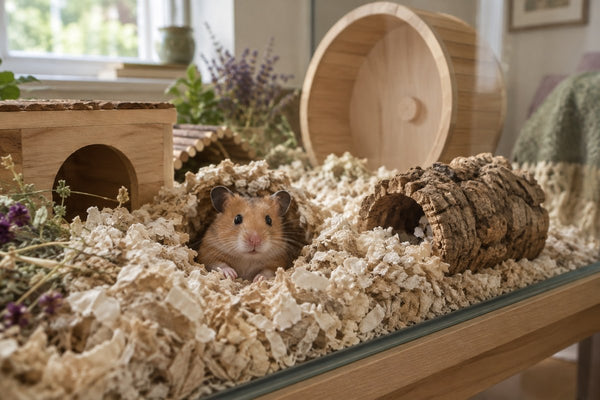
Hamsters and gerbils need bedding deep enough to burrow, with one area piled to 20 cm or deeper for a Syrian hamster and deeper still for gerbils, who build lasting tunnel systems. Paper-based and aspen beddings hold tunnels well. Rats and ferrets need less depth but good absorbency, with fleece liners a common washable option. Chinchillas do well on a dust-free paper bedding. Avoid scented beddings and cedar or untreated pine shavings. Browse our small animal bedding and litter.
Hides, hammocks and tunnels
Every species here is a prey animal or a burrower at heart and needs places to retreat. Hamsters want a multi-chamber hide buried in the bedding; gerbils like tunnels and cork tubes; rats love hanging hammocks and cosy fabric pods high in the cage; chinchillas prefer wooden houses and ledges they can jump between; ferrets sleep for long stretches and favour enclosed sleeping sacks. Offer more hides than animals. Our hides, hammocks and tunnels include wooden houses and bridges from Niteangel.
Wheels and toys
A wheel is essential for hamsters and gerbils and should be solid, with no rungs or gaps that could catch a foot. Size it so your animal runs with a straight back: around 28 cm or more for a Syrian hamster, a little less for dwarf species, and a larger, sturdier wheel for gerbils. Chinchillas need a very large, solid wheel if they have one at all. Rats rarely use wheels but enjoy foraging toys, ropes and things to shred. See our hamster wheels and toys.
Water and bowls
A drip-feed bottle keeps water clean and suits rats, chinchillas and many hamsters, though some animals drink more readily from a heavy ceramic bowl. Offering both while your pet settles in shows you which it prefers. Check bottles daily, because a stuck ball means no water. Browse our small animal bottles and bowls, including drip-feed bottles from Lixit.
Food: species-specific mixes
A hamster mix, a rat nugget and a chinchilla pellet are formulated quite differently, and feeding the wrong one is a common mistake. Feed a species-specific food suited to your animal’s age, add fresh vegetables suitable for that animal, and give chinchillas unlimited good-quality hay. Change foods gradually over a week or two. Our hamster and small animal food includes species-specific ranges from Supreme Petfoods. Ask a vet who sees small animals if you are unsure what to feed.
Carriers and harnesses
For vet visits, a small, well-ventilated carrier with a secure door and a little familiar bedding inside is far less stressful than a cardboard box. For ferrets, a lightweight harness and lead allow supervised walks outdoors, provided it fits snugly and your ferret is used to it at home first. Hamsters, gerbils and chinchillas should not be walked on harnesses. See our small animal carriers and ferret and small animal harnesses.
How to choose: before you order
- Fit the cage to how your species moves: floor space for hamsters and gerbils, height for rats and chinchillas.
- Check the bar spacing before you buy.
- Give burrowers deep, unscented bedding.
- Choose a solid wheel large enough for a straight back.
- Stick to a species-specific food and switch gradually.
- Use a secure carrier for every trip, and harnesses for ferrets only.
Frequently asked questions
Can hamsters live together?
Adult Syrian hamsters are solitary and will fight if housed together. Some dwarf hamsters can live in pairs if raised together, but separations are common, so be ready with a second set-up. Gerbils, rats and ferrets, by contrast, should live with companions of their own species.
How big should a Syrian hamster’s wheel be?
Around 28 cm in diameter or more, so the hamster can run without arching its back. Choose a solid running surface without rungs or gaps.
Why does a chinchilla need a dust bath?
Chinchillas have very dense fur that they keep clean by rolling in fine dust. Offer a dust bath a few times a week for short sessions rather than leaving it in the cage. Keep their room cool, as they are sensitive to heat.
Can I walk my ferret on a lead?
Yes, many ferrets can be walked on a well-fitted harness and lead once they are used to wearing it indoors. Hamsters, gerbils and chinchillas should not be walked on harnesses.
Where to go next
Explore the full small animals department, and read our hamster and gerbil set-up guide for more detail on those two. Rabbits and guinea pigs have their own section on our shop by pet page. UK delivery costs nothing, and returning anything unused is free for 30 days, as set out on our delivery and returns page.