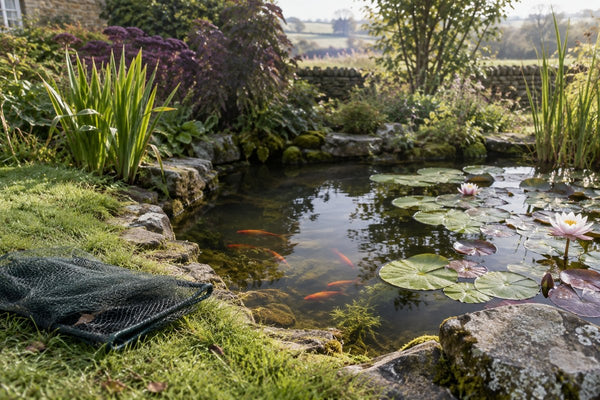
Aquascaping a freshwater tank: substrate, stone, wood and light

Short answer: start an aquascape with the tank size and where it will stand, because a filled tank is very heavy. Then choose a substrate (gravel for easy cleaning, sand for a natural look and for bottom-dwellers), build a simple layout with one main stone or piece of wood, add plants in layers from front to back, fit a plain background and finish with an LED light on a timer. Rinse everything before it goes in and let the tank run before adding any fish.
Aquatics has always been close to the heart of ArdentPets. This guide is about design: how to turn a glass box into a scene that looks settled and natural. If you are at the very start and need the full equipment list, read our beginner’s aquarium set-up checklist first; filtration has a guide of its own. We sell equipment only, never live fish.
The tank: size, shape and where it stands
A litre of water weighs about a kilogram, so a 60-litre tank with substrate and stone can weigh well over 70 kg. Place it on a purpose-made cabinet or a level, sturdy surface, away from radiators and direct sun, which encourages algae. A longer tank gives more front-to-back depth for layering than a tall one of the same volume, and the footprint matters more for design than the height. If a capacity is given in gallons, check which gallon is meant: an imperial gallon is about 4.5 litres, while the smaller gallon some makers use is about 3.8 litres. Our aquarium tanks include glass tanks as well as rounded acrylic designs from biOrb.
Substrate: gravel or sand
Gravel is forgiving: water moves through it, waste sits on top where a siphon can lift it, and it holds plant roots and ornaments firmly. Choose a natural colour; very bright gravels tend to dominate the scene and show every speck of debris. Aim for a layer of around 5 cm, sloping slightly higher at the back so the eye is drawn upward. Browse aquarium gravel.
Sand gives a softer, more natural look and suits fish that sift the bottom, such as corydoras. It packs more tightly, so stir the surface gently during cleaning. Rinse sand thoroughly in a bucket until the water runs almost clear, otherwise the tank will be cloudy for days. Our aquarium sand includes fine aquarium sands from Carib Sea.
Hardscape: stone and wood
The hardscape is the skeleton of the layout, and restraint usually looks better than variety. Pick one type of stone, use an odd number of pieces, make one clearly the largest, and place it a little off centre, roughly a third of the way along. Before you buy, check the description says it is suitable for aquariums, because some decorative rocks raise water hardness, which matters if your fish prefer soft water. Rest heavy stones directly on the glass bottom, with substrate poured around them, so burrowing fish cannot undermine them. See our aquarium rocks and stones.
Wood softens the angular lines of stone and gives fish shade and cover. New driftwood often floats at first and may release tannins that tint the water the colour of weak tea; that is harmless, and soaking the wood for a week or two before use reduces it. Wedge wood under stones or tie it down while it waterlogs. Browse aquarium driftwood and wood.
Plants: build in layers
Think of the tank in three bands. Low, spreading plants go at the front, mid-height bushes around the hardscape, and tall stems at the back and sides to frame the view. Artificial plants need no light or fertiliser, never melt back and are a sensible choice for a first scape or for fish that nibble greenery. Mixing a few real plants among them is also common. Our artificial aquarium plants include soft silk-style plants from biOrb.
Background and light: finishing the scene
A plain background hides cables and the wall behind the tank and makes colours stand out. Black or dark blue gives depth; a frosted or pale panel suits a brighter, airy look. Fit it before the tank is filled, when you can reach behind easily. Browse our aquarium backgrounds.
Light brings the layout to life, and LED units are now the norm because they run cool and use little power. Check the light’s length matches your tank, make sure it comes with a UK plug, or a mains adapter made for 230 V supplies, and run it on a timer for a steady eight hours or so a day; long, irregular days are a common cause of algae. Our aquarium LED lights include adjustable full-spectrum units from hygger.
How to choose: before you order
- Confirm the floor and cabinet can carry roughly 1 kg per litre plus decor.
- Choose gravel for easy cleaning or sand for bottom-sifting fish, and rinse it well.
- Use one type of stone, an odd number of pieces and one clear focal point.
- Soak driftwood before use and anchor it until it sinks.
- Plant low at the front, medium in the middle and tall at the back.
- Check the light length, the plug and the voltage, and put it on a timer.
Frequently asked questions
Should I choose gravel or sand for my first tank?
Gravel is the easier choice for most first tanks because waste stays on top for the siphon and plants and ornaments anchor firmly. Sand suits bottom-sifting fish and a natural style, but needs thorough rinsing and gentle stirring during cleaning.
Why has my water turned brown after adding driftwood?
New wood releases tannins that stain the water a tea colour. It is harmless to most freshwater fish and fades with water changes. Soaking the wood in a bucket for a week or two before use reduces it.
How long should an aquarium light be on each day?
Around eight hours a day on a timer is a sensible starting point for most freshwater tanks. Irregular or very long lighting periods tend to encourage algae.
Do you sell live fish or plants?
No. ArdentPets sells aquarium equipment, decor and artificial plants only. When you are ready for fish, a specialist aquatic shop can tell you which species are compatible.
Where to go next
See everything in our fish and aquatics department, or visit shop by pet to browse other animals. Every UK order travels free, and you can return unused items free of charge within 30 days; read how on our delivery and returns page.