Bringing a kitten home: the first weeks

Short answer: bring your kitten home no earlier than eight weeks, and many breeders and charities wait until twelve or thirteen. Start it in one quiet room with a litter tray, food, water, a bed and a scratching post, then widen its world gradually. Register with a vet straight away to plan vaccinations, microchipping and neutering, and keep your kitten indoors until those are done.
A kitten’s first weeks in a new home shape how confident and relaxed it will be as an adult cat. A little preparation before the day, and patience in the weeks after, makes the transition far easier for everyone. This guide covers where to find a kitten, what to set up, the essential vet visits and the hazards that catch new owners out.
Finding a kitten responsibly
In England, Lucy’s Law means that puppies and kittens under six months cannot be sold by third-party dealers such as pet shops; you buy directly from the breeder or adopt from a rescue. Always see the kitten with its mother in the place where it was raised, and ask about health checks, first vaccinations and worming so far. Rescue centres and cat charities often have kittens that are already vaccinated, microchipped and sometimes neutered.
A safe room to start in
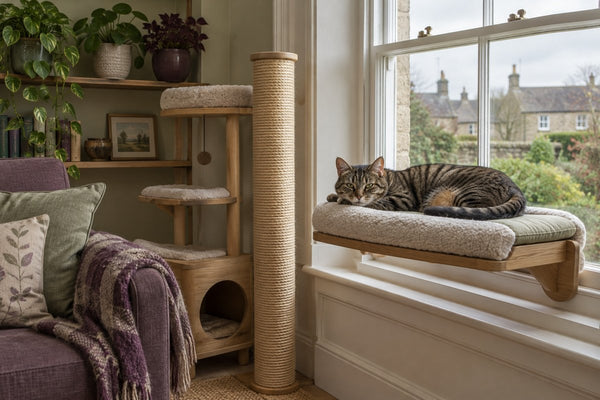
Choose one quiet room and set it up before collection day. Put a low-sided tray from our cat litter trays range in one corner, food and water well away from it, and a bed in a warm, enclosed spot. A sturdy post from our cat scratching posts gives your kitten the right place to scratch from day one. Use the same litter the kitten had before, and the same food, so there are fewer changes at once.
Bring your kitten home in a secure carrier from our cat carriers range, and let it come out in its own time. Over the following days, sit in the room quietly, play gently and let it approach you. Once it is eating, using the tray and exploring confidently, open the door to the rest of the house a room at a time.
Bedding, bowls and play
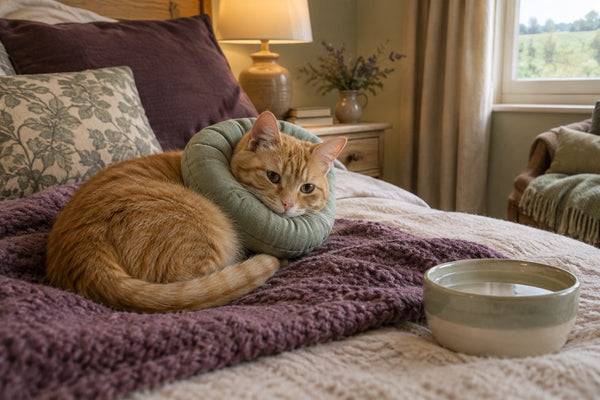
Kittens sleep a great deal, so give them a choice of resting places, including somewhere high and somewhere hidden. A soft bed from our cat beds range near a radiator is often a favourite. Use shallow, easy-clean dishes from our cat bowls range, and feed a complete kitten food, divided into several small meals. Cow’s milk is not needed, and many cats cannot digest it well.
Play is how kittens learn to hunt, climb and control their bite. Use wand toys and balls from our interactive cat toys range rather than hands or feet, so your kitten does not learn to pounce on people. Short sessions several times a day, ending with a small meal, suit a kitten’s natural rhythm.
The first vet visits
Register with a vet in the first week. Your kitten will usually have a health check and start or continue its primary vaccinations, followed by a second one a few weeks on. Your vet will also plan a parasite-control routine. In England, every pet cat needs a microchip before it reaches twenty weeks of age, and the database record has to show your current details. Neutering at roughly four months of age, ahead of sexual maturity, is widely suggested by vets and cat charities. Keep your kitten indoors until it is vaccinated, microchipped and neutered.
Household hazards
- Lilies: every part of the plant, including the pollen and vase water, is highly toxic to cats.
- Washing machines and tumble dryers: check inside before every load.
- Recliner chairs, open windows and balconies.
- Cables, hair bobbles, string, ribbon and sewing thread, which can be swallowed.
- Human medicines, essential oils and some household cleaners.
When to call the vet
Kittens can become unwell quickly. Contact your vet the same day if your kitten stops eating, has diarrhoea or vomiting that lasts more than a few hours, sneezes with runny eyes, seems weak, or may have eaten something harmful. If you suspect lily contact, go straight to the vet without waiting for signs.
Quick checklist
- Meet the kitten and its mother where they live, or go through a rescue.
- Set up one quiet room with tray, food, water, bed and scratching post.
- Collect your kitten in a secure carrier.
- Register with a vet and plan vaccinations and neutering.
- Microchip by twenty weeks and keep details current.
- Remove lilies and secure appliances, windows and cables.
Frequently asked questions
What age should a kitten leave its mother?
No earlier than eight weeks, and many responsible breeders and cat charities wait until twelve or thirteen weeks. Older kittens have had more time to learn from their mother and littermates and are often more confident.
When can my kitten go outside?
Wait until your kitten has finished its primary vaccinations, is microchipped and has been neutered, and has lived with you for several weeks so it knows where home is. Your vet can advise on timing.
Does my kitten need milk?
No. Once weaned, kittens get everything they need from a complete kitten food and fresh water. Many cats do not digest cow’s milk well, and it can upset their stomach.
How soon should I register my kitten with a vet?
Within the first week. An early health check catches problems quickly and lets your vet plan vaccinations, microchipping, parasite control and neutering in the right order.
Where to go next
Our guides to pet vaccinations and neutering go into those steps in more detail, and planning an indoor cat’s territory helps you arrange the space as your kitten grows. Everything for cats and kittens is in the cat department; shop by pet covers the rest of the household.